

Book of Gold Classic: Slot That Publishes No Return
In short — our verdict: 3.8/10 — We opened Playson's own demo and read its GAME INFO window end to end. It prints the paytable, the lines and the build number, and no return figure at all — and neither does the studio's game page.
This is the game where we read everything and still cannot tell you the return. Playson's own client opens on a 1.00 bet with 11,000.00 in play money. Its GAME INFO window runs from the scatter table to build 81.6.0, and nowhere in it is a percentage. The studio's game page publishes the release date, the grid and the mechanic — and stops.
3.8/ 10
- Return transparency1.0
- Ceiling clarity2.0
- Feature depth6.0
- Bet range5.0
- Documentation5.0
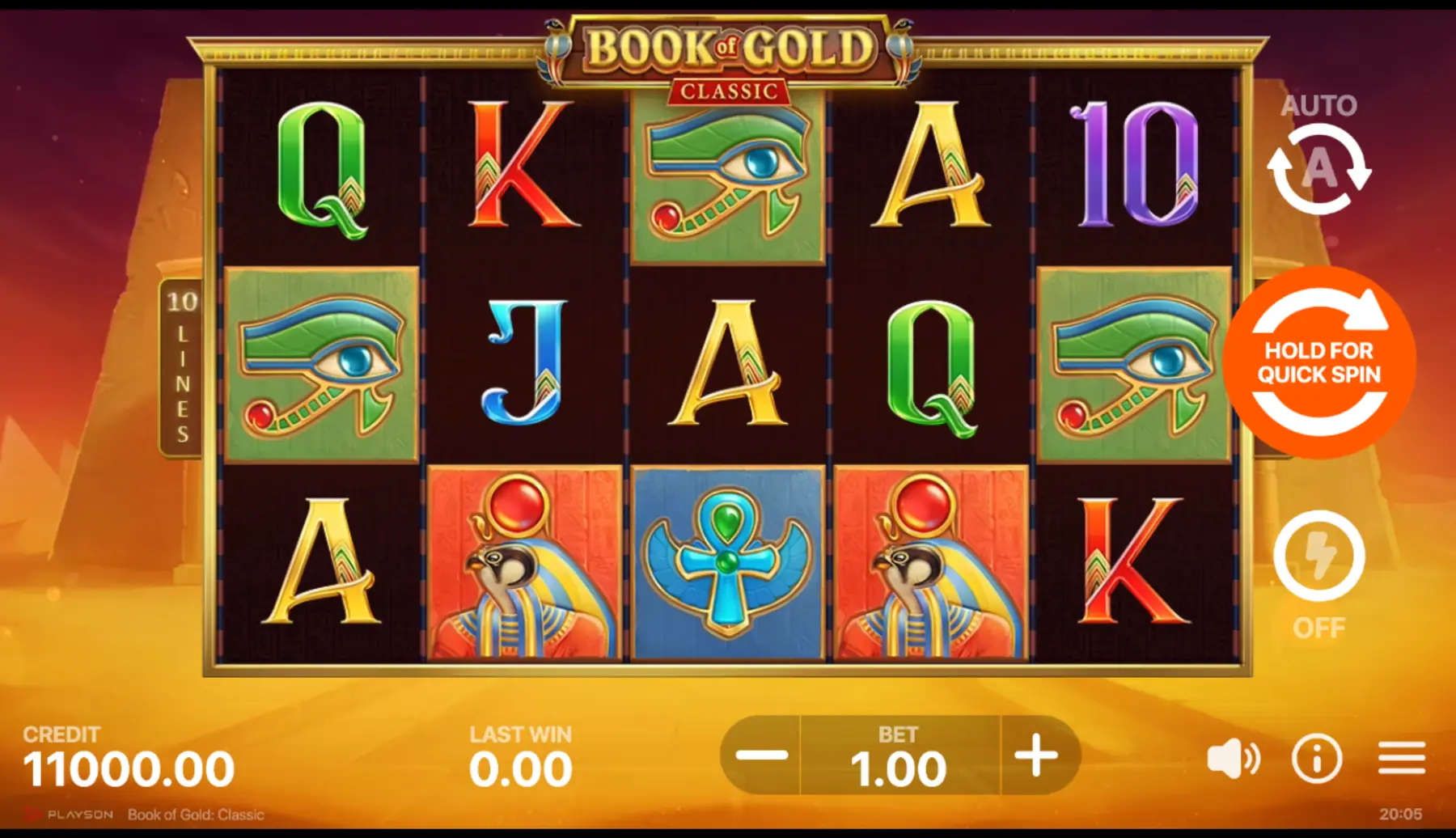
Table of contents
- Book of Gold: Classic Strengths and Weaknesses
- What the Client Prints, at the 1.00 Bet It Opened On
- Inside Playson's Own Client
- A Book of Gold Page That Stops Early
- Ten Lines, Fixed, and Why That Helps
- Classic Against Its Own Sibling
- Reading a Game You Cannot Price
- The Figures Neither Playson nor Its Client Publishes
- Our Book of Gold: Classic Verdict and Rating
- Key Terms Used on This Page
- What Else Do Readers Ask
Book of Gold: Classic Strengths and Weaknesses
Pros: What Works Well
- Pro: The demo opens straight from the studio's own game page, with no account and no aggregator in between
- Pro: The GAME INFO window is complete about mechanics: scatter pays, the free-spins trigger, line rules and the build number
- Pro: Ten lines are fixed, so there is no bet-line arithmetic to get wrong
- Pro: The studio publishes the release date — — and the grid on its own page
Cons: What Holds It Back
- Con: No return figure anywhere: not on the studio page, not on any screen of the client's own rules
- Con: No ceiling either — the client prints a paytable but never a maximum win
- Con: No volatility, published or hinted
- Con: The game page refuses a plain request with a 403 and opens only in a browser, so even reading the little that is published takes one
What the Client Prints, at the 1.00 Bet It Opened On
| Field | Value |
|---|---|
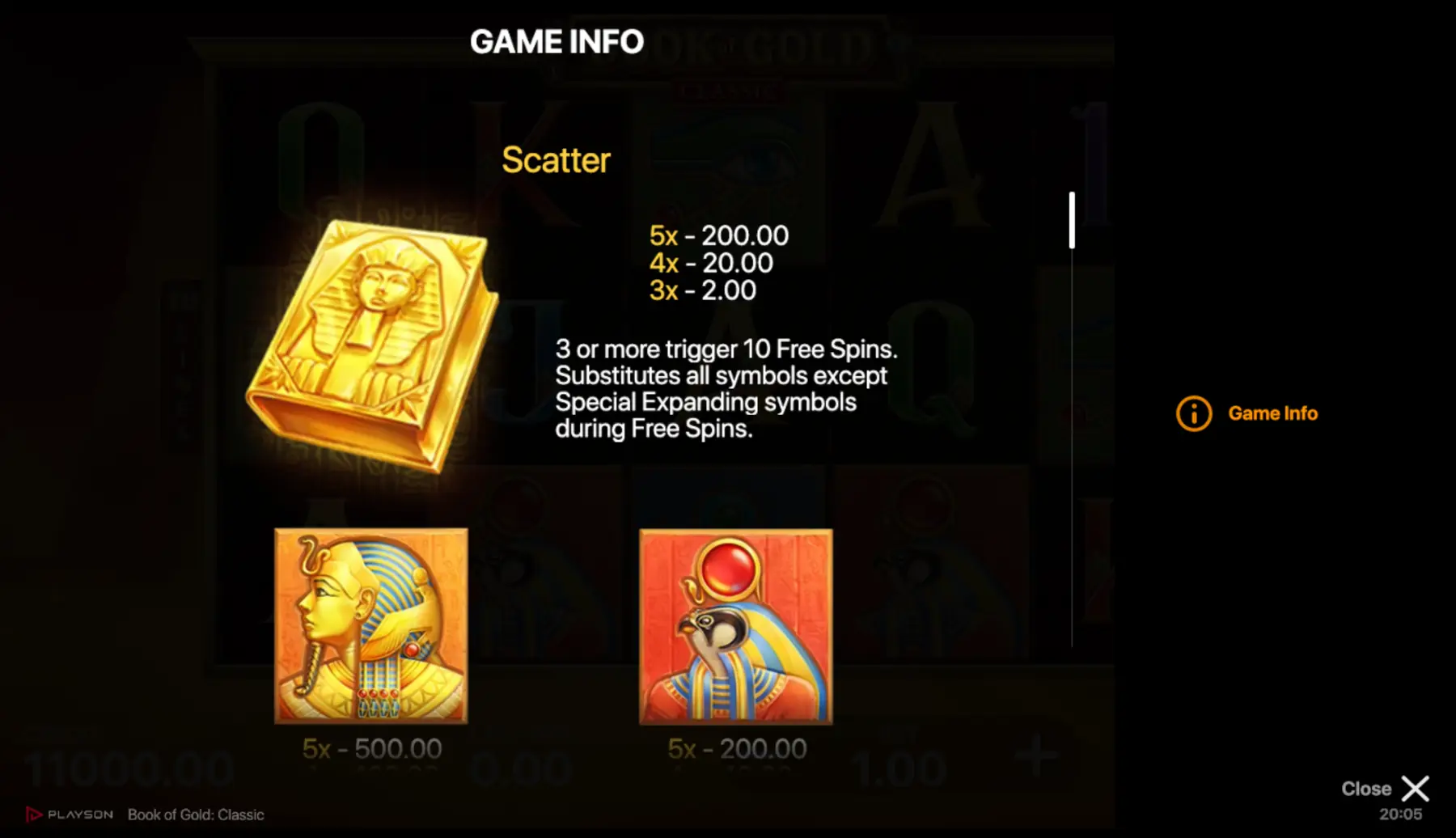
| Scatter, five | 200.00 |
| Scatter, four | 20.00 |
| Scatter, three | 2.00 |
| Top symbol (pharaoh), five | 500.00 |
| Free spins on 3+ scatters | 10 |
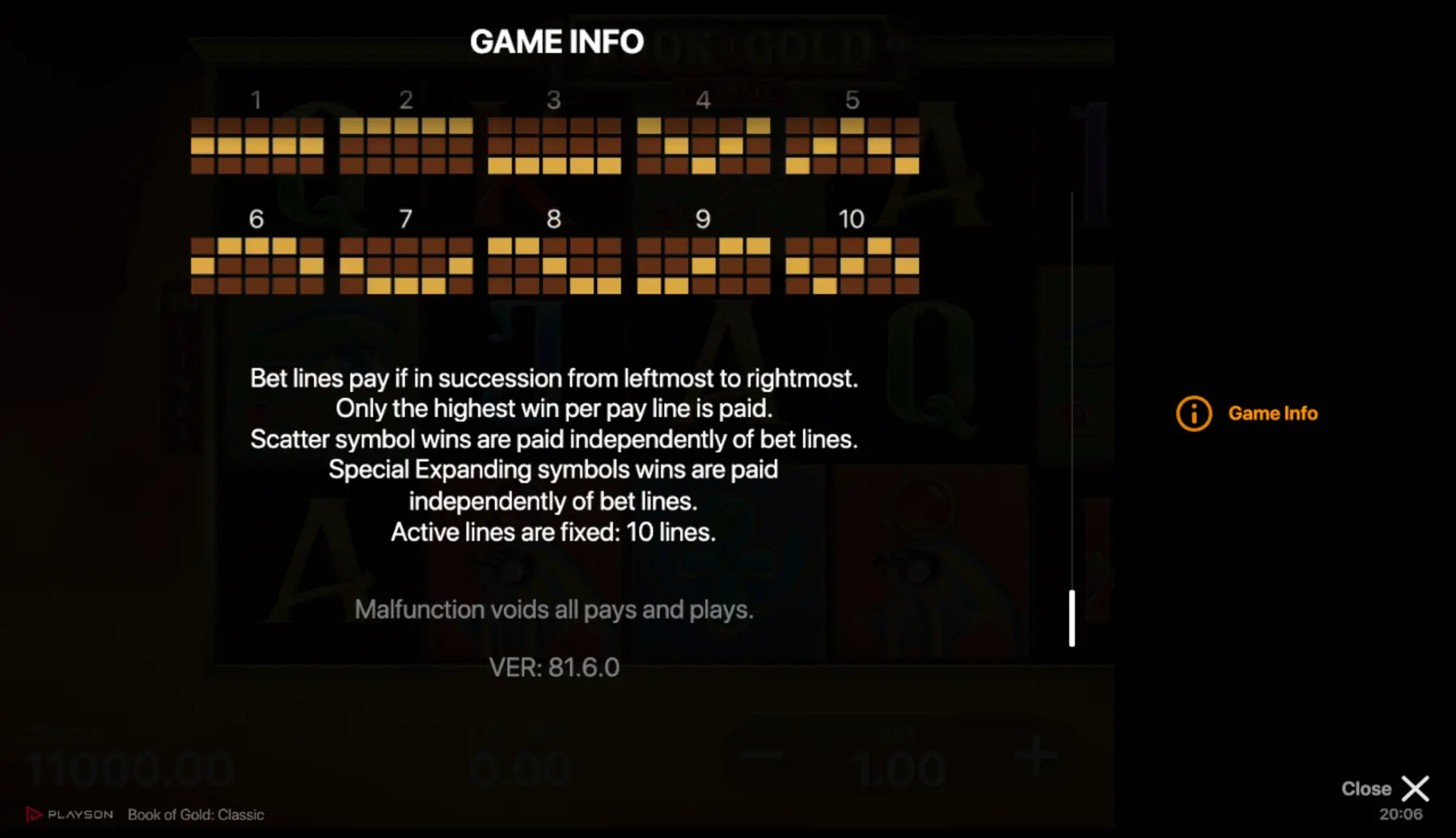
| Active lines | 10, fixed |
| Client build | 81.6.0 |
Figures current as of ; the operator's live terms prevail.
Inside Playson's Own Client
The GAME INFO window is not thin. It carries the scatter table, the values of its top two symbols and every line diagram. It also states that only the highest win per line is paid, that scatter and expanding-symbol wins are paid independently of the lines, and which build you are on.
What it never carries is a percentage. We read to the last screen. It ends on "Malfunction voids all pays and plays" and "VER: 81.6.0", with no return figure before it.
A Book of Gold Page That Stops Early
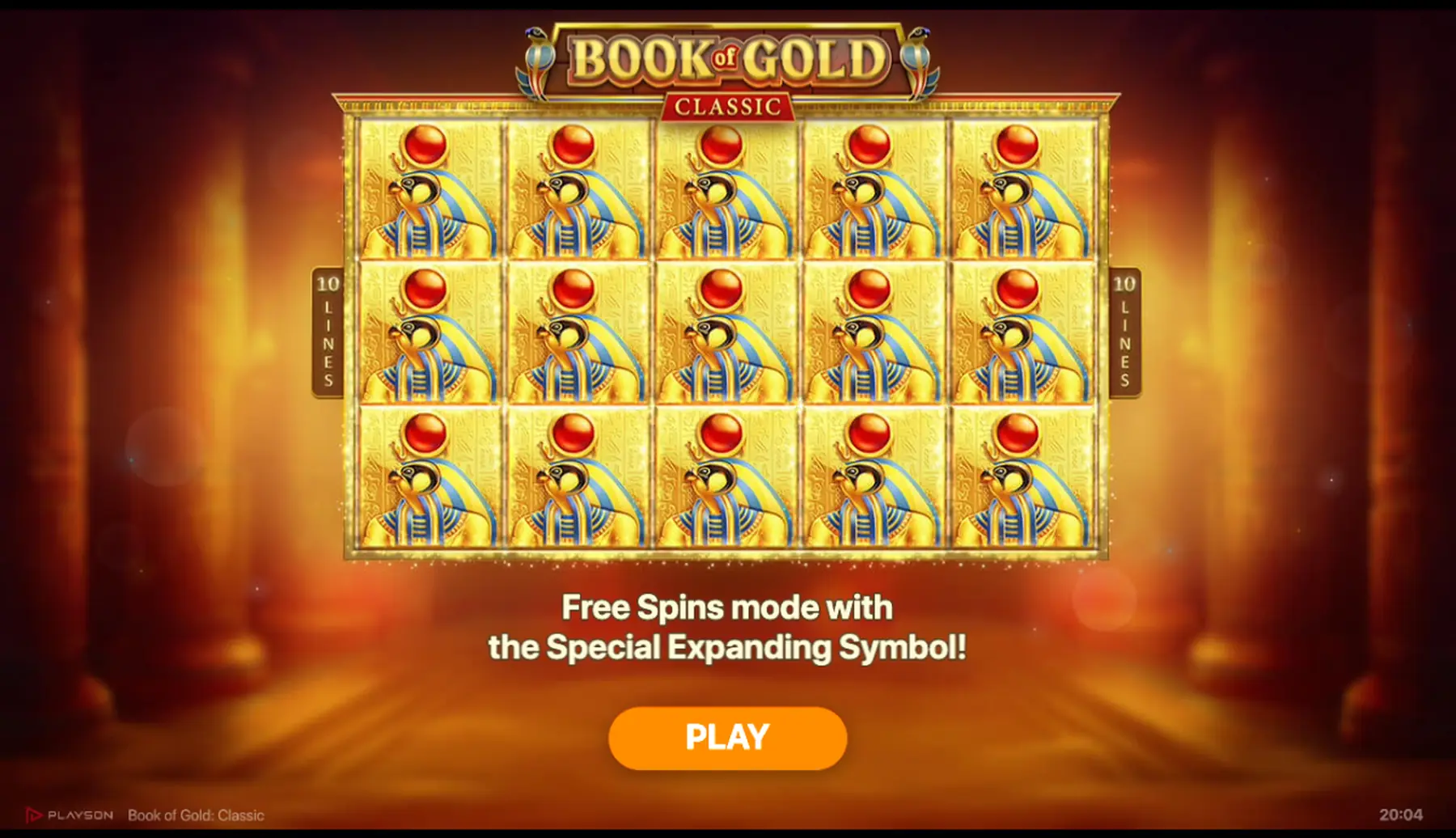
The studio's own page for this title publishes the release date of , the 3x5 grid and the ten fixed lines. The Scattered-Wild book is named there too; the special expanding symbol we read on the client's own intro screen rather than on the page.
It does not publish a return, a ceiling or a volatility. Nolimit City puts four figures in machine-readable form on its page for Book of Shadows. Set against that, this is a decision about what the public gets to know, not a technical limitation.
Ten Lines, Fixed, and Why That Helps
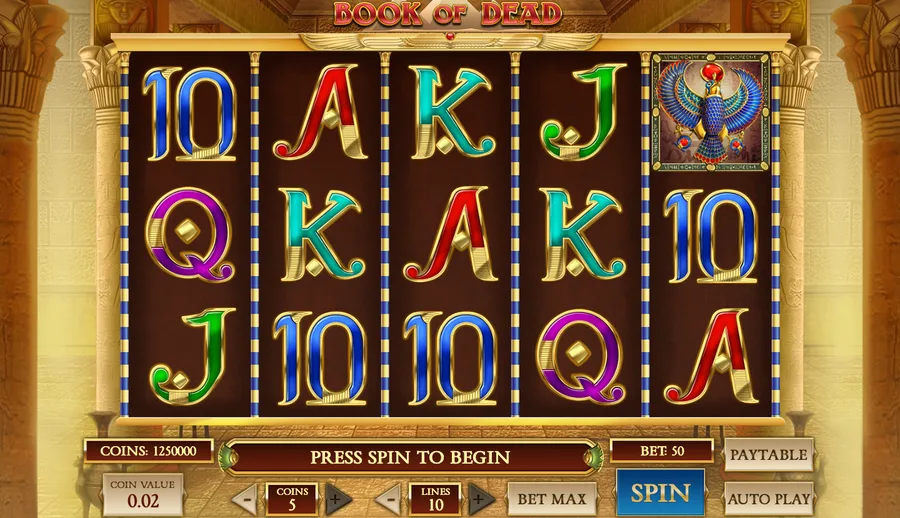
Every line is active on every spin, so the bet shown is the bet played. There is no coins-per-line arithmetic of the kind Book of Dead needs. There, a ceiling in coins has to be divided by a 50-coin maximum bet before it means anything.
It makes the game easy to read and makes the missing return more conspicuous: everything else about the maths is right there on screen.
Classic Against Its Own Sibling
Playson publishes a second Book title, Multichance, and the two are not the same game with a different coat. That one carries a BUY BONUS button priced at 100.00 at a 1.00 bet, and its scatter trigger awards twelve free spins.
This one has no purchase button at all and awards ten. Two games, nearly the same name. One sells a round, the other sells nothing, and their free-spin counts differ. That is why the figures here are kept per game rather than per family.
Reading a Game You Cannot Price
Without a return, the useful questions change. You can still read the scatter table and the top symbol values off the paytable, see that ten lines are fixed, and know the build you are on from the rules screen.
What you cannot do is compare this game to another on the figure that matters most. We do not recommend filling that gap with a catalogue's number. Eight different returns are published for the Book of Ra family by operator pages, and none by a studio document; secondary catalogues circulate four values and name no source, two of them repeating figures a casino published.
The Figures Neither Playson nor Its Client Publishes
| Figure | Studio page | Game client |
|---|---|---|
| Return to player | Not published | Not printed |
| Maximum win | Not published | Not printed |
| Volatility | Not published | Not printed |
| Release date | — |
Our Book of Gold: Classic Verdict and Rating
Key Terms Used on This Page
- GAME INFO window
- The client's own rules and paytable screens; here they run from the scatter table to the build number without a return figure.
- Fixed lines
- Paylines that are always active, so the displayed bet is the bet played — 10 of them here, and the 1.00 the client opens on covers all 10.
- Scattered-Wild
- A symbol that both pays from anywhere and substitutes for others, which is how Playson describes the book here; the client adds that it does not substitute for the special expanding symbol during free spins.
- Build number
- The client version printed at the end of the rules, 81.6.0, which dates what you actually read.
Deposits and identity checks stay on the operator's own secure site.
Related Reading
Elsewhere in this catalogue, from the same section first:
What Else Do Readers Ask?
Two of these answers come from the client we read, and two are about what it leaves out.
What is the RTP of Book of Gold: Classic?
Nobody we could find publishes one. Playson prints no figure on its game page, the client's own GAME INFO window shows none on any of its screens, and we found no licensed casino publishing a return for this title.
How many free spins does the trigger award?
Ten, awarded for three or more scatters, exactly as the client's own rules screen states it at the 1.00 bet the demo opens on.
Is there a bonus buy?
No, and that is the difference from its sibling. This title has no purchase button at all, while Playson's Multichance version sells one at 100x the bet.
What does the scatter pay?
At the 1.00 bet the client opened on, the GAME INFO window lists 200.00 for five, 20.00 for four and 2.00 for three of them.
How far did we read in the client?
We open the studio's own demo, read the GAME INFO window to the last screen, and report what it does not print as carefully as what it does.