Our Testing Method for a Slot in Full
Every figure on Book Slots comes from one of four places. A studio's own game client, a studio's own page or document, a licensed casino that must publish a return, or a regulator's register. We opened six demo clients across four studios, were refused by two studios, and published 29 frames, 16 of them shot in this pass. Not one real-money spin has been played on any title here, and that limit shapes everything below.
- Where testing happens
- The studio's own demo client, where one exists
- Demo clients opened
- 6, across four studios
- Refusals recorded
- 2, with what each server returned
- Titles with no demo at all
- 4 of the 9: three refused us, one serves none
- Frames published
- 29, every one from a studio client
- Real-money spins played
- None, on any title
- Audience
- Adults aged 18 or over
Table of contents
- Demo First, and Only the Studio's Own
- Two Studios Refused Us, and We Published That
- When the Studio Publishes Nothing, We Read the Casinos
- What a Demo Session Cannot Settle
- Scoring: Five Criteria, One Average
- The Four Limits of This Method
- Corrections Change the Page, Not the Verdict
- What the Screens Actually Printed
Demo First, and Only the Studio's Own
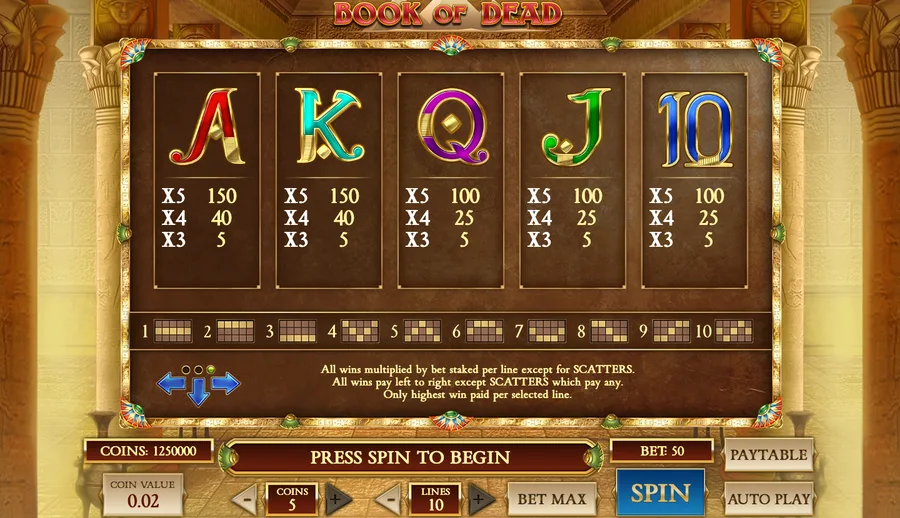
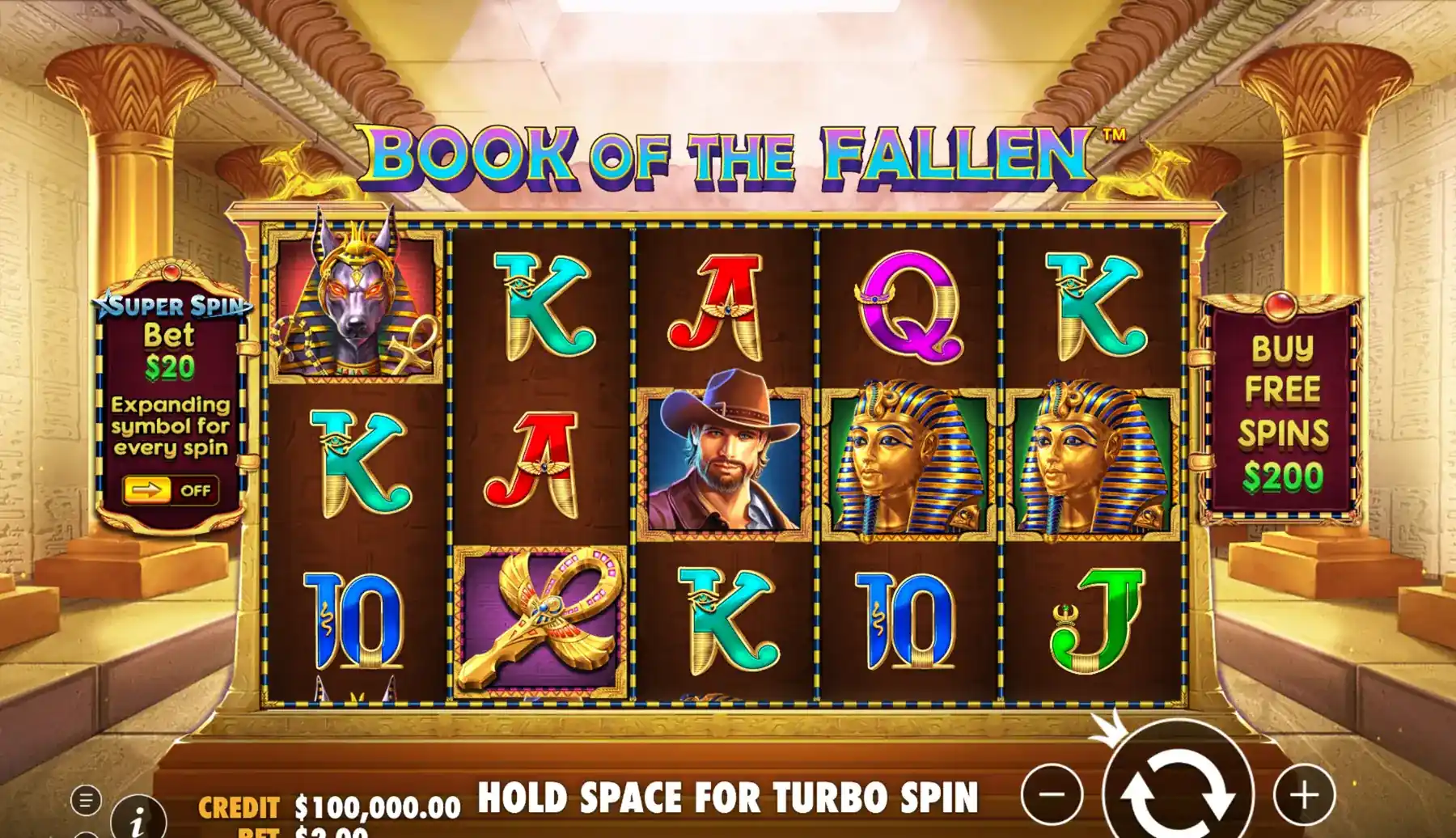
Testing starts in the client the studio itself serves. We opened five on . Book of Gold: Classic and Book of Gold: Multichance went through Playson's own PLAY DEMO button. Book of the Fallen and Book of Tut Megaways went through Pragmatic Play's demo launcher, and Book of 99 through Relax Gaming's Try Game link. Book of Dead was read in the same way a week earlier, on , and its frames are reused here rather than re-shot.
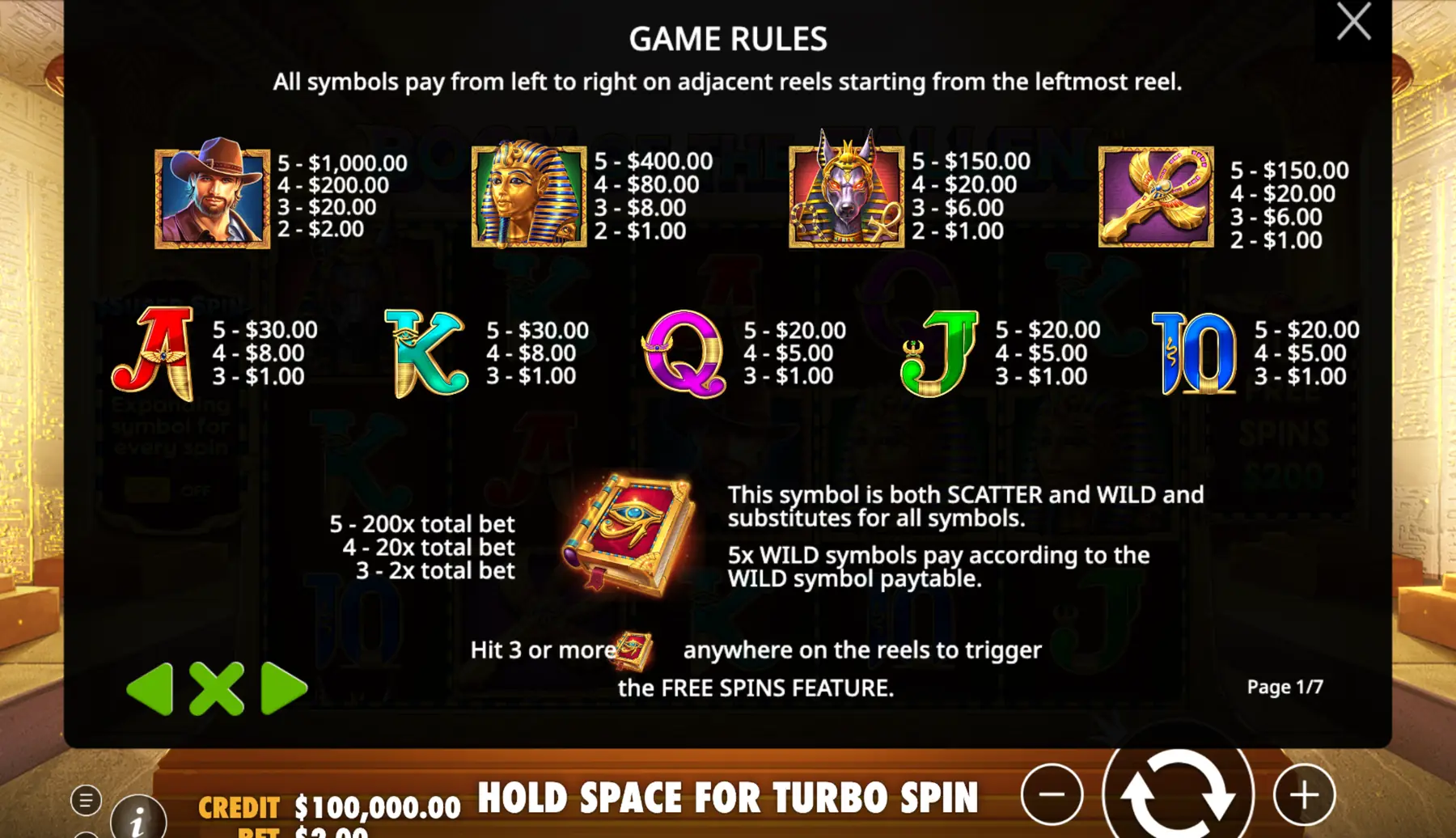
In each one we read the rules screens as far as the client served them — on Book of 99 that was five of about nine, and on Book of Tut Megaways we got no further than the opening screen. We noted the bet the client opened on and the play-money balance it granted, then photographed the screens that carry figures. Where a client prints a price, we quote the price and the bet it was shown at. $20 and $200 mean nothing without that second number.
Two Studios Refused Us, and We Published That
Greentube serves no public demo for the Book of Ra family. Its launcher runs through the studio's own gaming server. An anonymous request there returns 401 Unauthorized, because sessions go to licensed operators rather than to readers. An aggregator's copy loaded to a black screen.
Nolimit City serves Book of Shadows through playin.com, which refused our session as unauthenticated. We did not create an account, so no frames and no play sit behind that page. Both refusals are stated on the pages they affect instead of being quietly replaced with someone else's screenshots.
When the Studio Publishes Nothing, We Read the Casinos
Several markets require an operator to publish the return of the version it runs. That makes a licensed casino a usable source when a studio is silent. For Book of Ra Deluxe we read two pages. Admiral Casino UK's live page publishes 92.13%; an archived Grosvenor Casinos page from publishes 94.26%.
Where a figure comes from an archive rather than a live page we say so and date it. A geo-blocked page read through an archive is weaker evidence than one we opened today. The operator's name travels with every figure it published.
What a Demo Session Cannot Settle
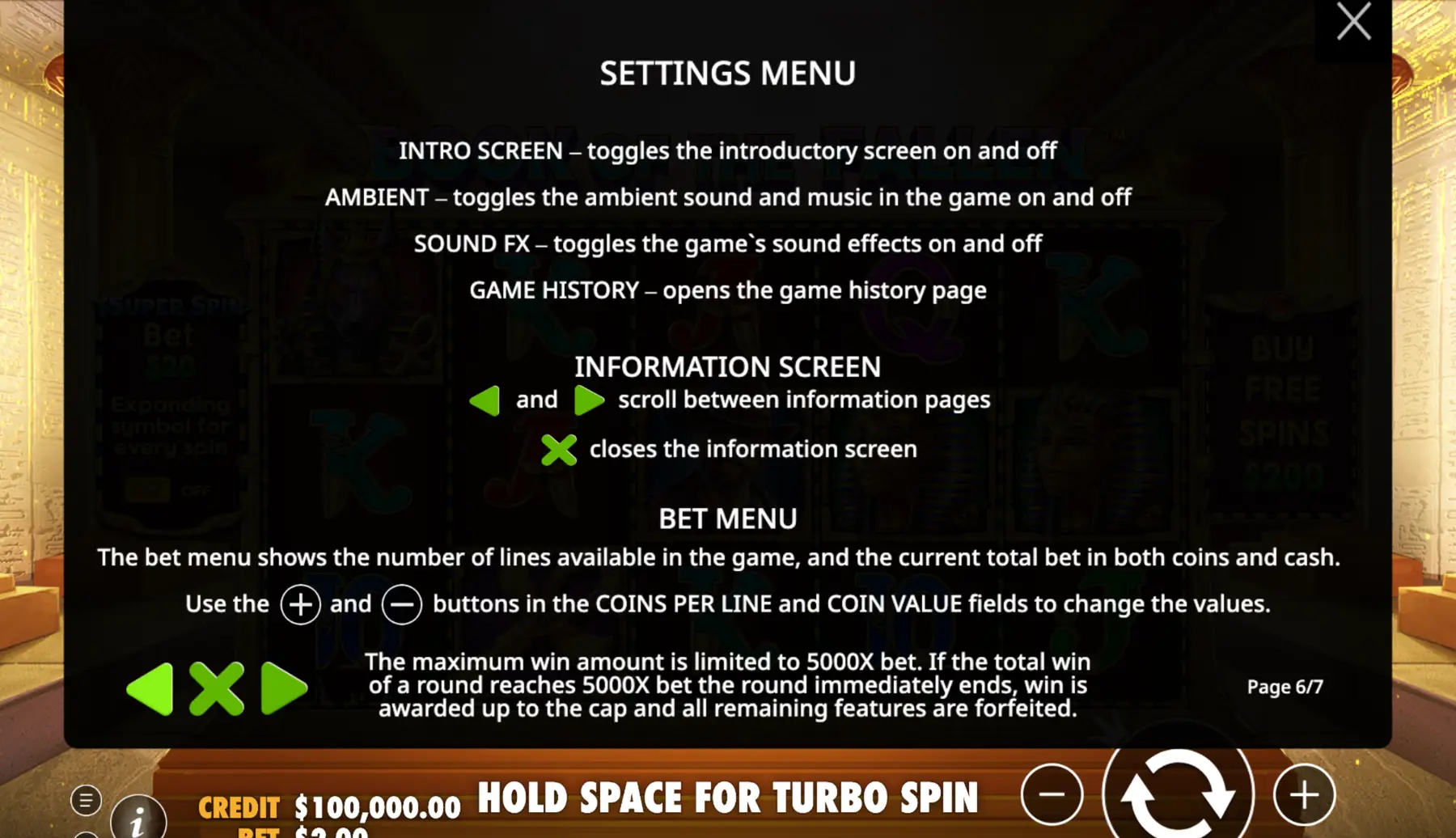
A demo can show you a paytable, a price, a rules line and a build number. It cannot measure a return: that is an average over millions of rounds, and no session of any length is evidence about it. Nor does it usually print one. Not one of the six clients we opened named a return figure on any screen we read, Relax Gaming's included — and that one ran with a jurisdiction code attached.
It also cannot tell you which build your casino runs. Play'n GO publishes five RTP configurations for Book of Dead, from 96.21% down to 84.18%. The public demo of that game carries no jurisdiction code, so it prints no figure at all; one public demo we opened elsewhere did carry a code and printed nothing either. And under a code the client prints the DEFAULT, not the build your casino runs. The figure that applies to your session is the one your casino publishes for the version it runs.
Scoring: Five Criteria, One Average
A game verdict rests on five named criteria, each scored from the class of evidence behind it: return transparency, ceiling clarity, feature depth, bet range and documentation. The headline score is their plain average to one decimal. Two games can therefore be compared criterion by criterion, and the totals agree with the parts.
| Criterion | What is judged | Evidence accepted |
|---|---|---|
| Return transparency | How many return figures are published, and by whom | Studio page or document; a licensed operator where the studio is silent |
| Ceiling clarity | Whether a maximum win is published, and in what units | Client rules screen, studio page, operator disclosure |
| Feature depth | How many distinct paid and free modes exist and how far the rules describe them | Rules screens where we read them; a studio page, a casino page or an opening screen alone where we did not |
| Bet range | Whether the stake floor and ceiling are published at all | Studio page, or a licensed casino's own game page where the studio publishes none |
| Documentation | How much a reader can check before depositing | Everything above, weighed against what is missing |
The Four Limits of This Method
Four limits shape every page here, and naming them is more useful than hiding them. We play no paid spins, so no outcome, balance swing or feature payout on this site comes from our own money. Two studios refuse us a demo entirely, which covers three of the games, and a fourth is served no demo at all — four of the nine are documented without a session behind them.
A spin cannot be recomputed by anyone on a reel game of this kind, so fairness is reported rather than proved. And where a figure exists only on a studio's own page, it rests on a single source describing itself. We mark that rather than smooth it over.
| Limit | Why it exists | What we do instead |
|---|---|---|
| No real-money play | Testing runs in free demos only | Returns are quoted from studios and licensed operators, never measured here |
| Two studios refuse a demo | Greentube answers 401; Nolimit requires an account | The refusal is published on the page it affects, with what the server returned |
| No spin-level proof | These titles expose no seed or hash a player could re-check | Fairness is reported rather than proved: this site passes on no studio testing claim for any of these titles, because none of the seven publishes one per game |
| Single-source figures | Some returns exist only on the studio's own page | The source is named in the sentence that carries the figure |
Corrections Change the Page, Not the Verdict
If a figure here is wrong, send the document that shows it and the date you read it. A correction that holds up changes the page and moves its update date. Where two sources disagree, both are printed with the party that published each.
The whole method fits in one rule: nothing reaches a reader that a studio, a client, a licensed operator or a regulator's register has not already printed. A third-party catalogue is read here and never quoted, however often it repeats a figure. Where none of them has, the page says so. Every page here is written for adults aged 18 or over.
What the Screens Actually Printed
Three of the twenty-nine frames published here, each one a screen from a studio's own client rather than a marketing image. The pages that quote a figure carry the frame it was read from.
Deposits and identity checks stay on the operator's own secure site.
Related Reading
Elsewhere in this catalogue, from the same section first: