Book of Slots: How the Genre Works and Where It Differs
In short: Every Book slot whose rules we could read gives the book a job no payline can do — it triggers or counts from anywhere on the reels — and adds a symbol that expands across a reel in free spins. On three of those four the book also pays from anywhere, and on six of the nine it is the wild as well. On four of the nine that book is also the wild. What differs is everything you can measure. The published returns on this shelf run from 84.18% to 99%, and three studios publish no return at all.
One mechanic, nine games, and 14.82 points between the best and worst published return. Every Book slot whose rules we could read gives the book a job no payline can do — it triggers or counts from anywhere on the reels — and adds a symbol that expands during free spins; on six of the nine the book is the wild as well. Past that they diverge sharply. Ceilings run from 5,000x to 30,338x, one studio publishes five different returns for a single title, and three publish no return at all.
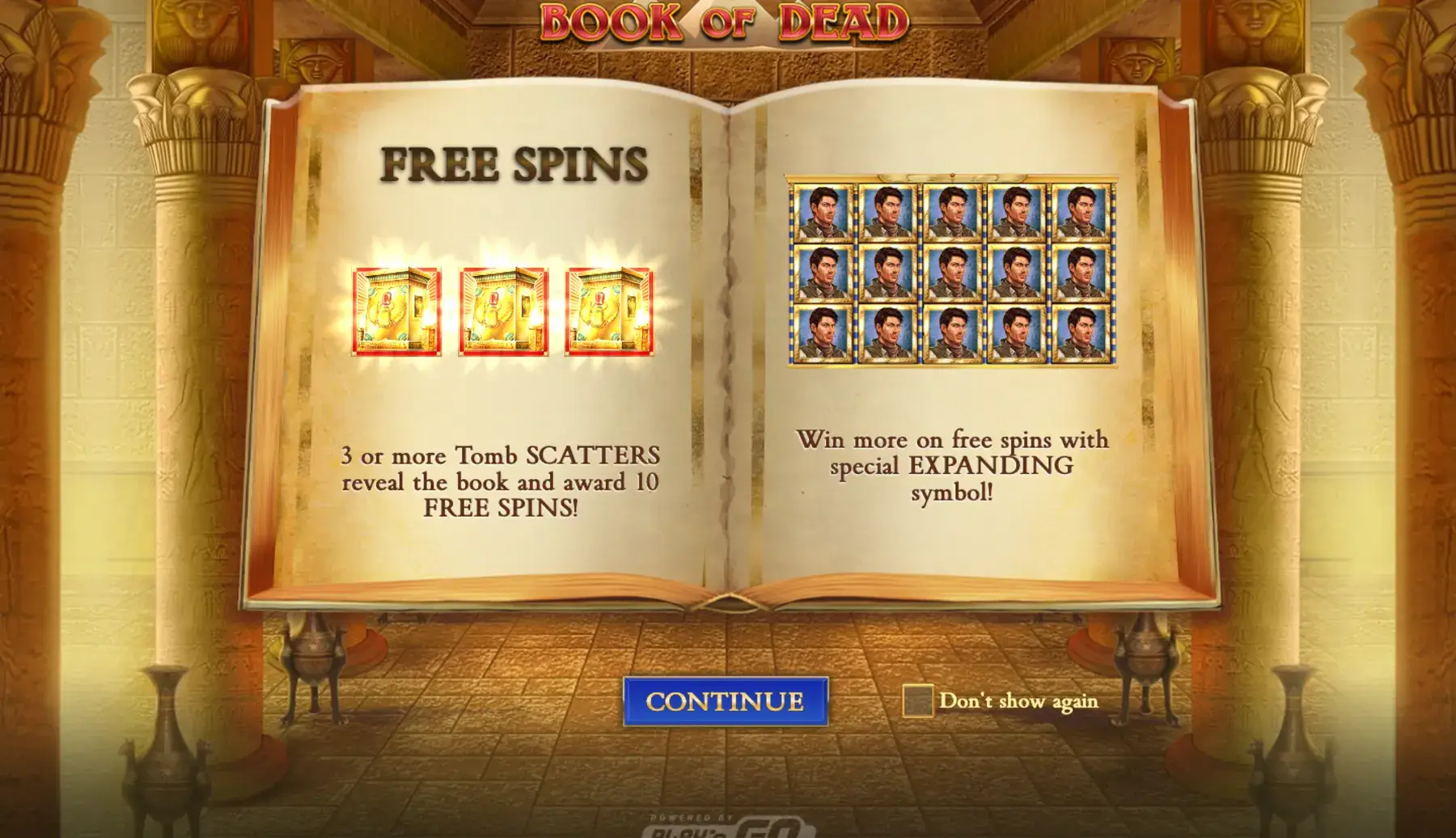
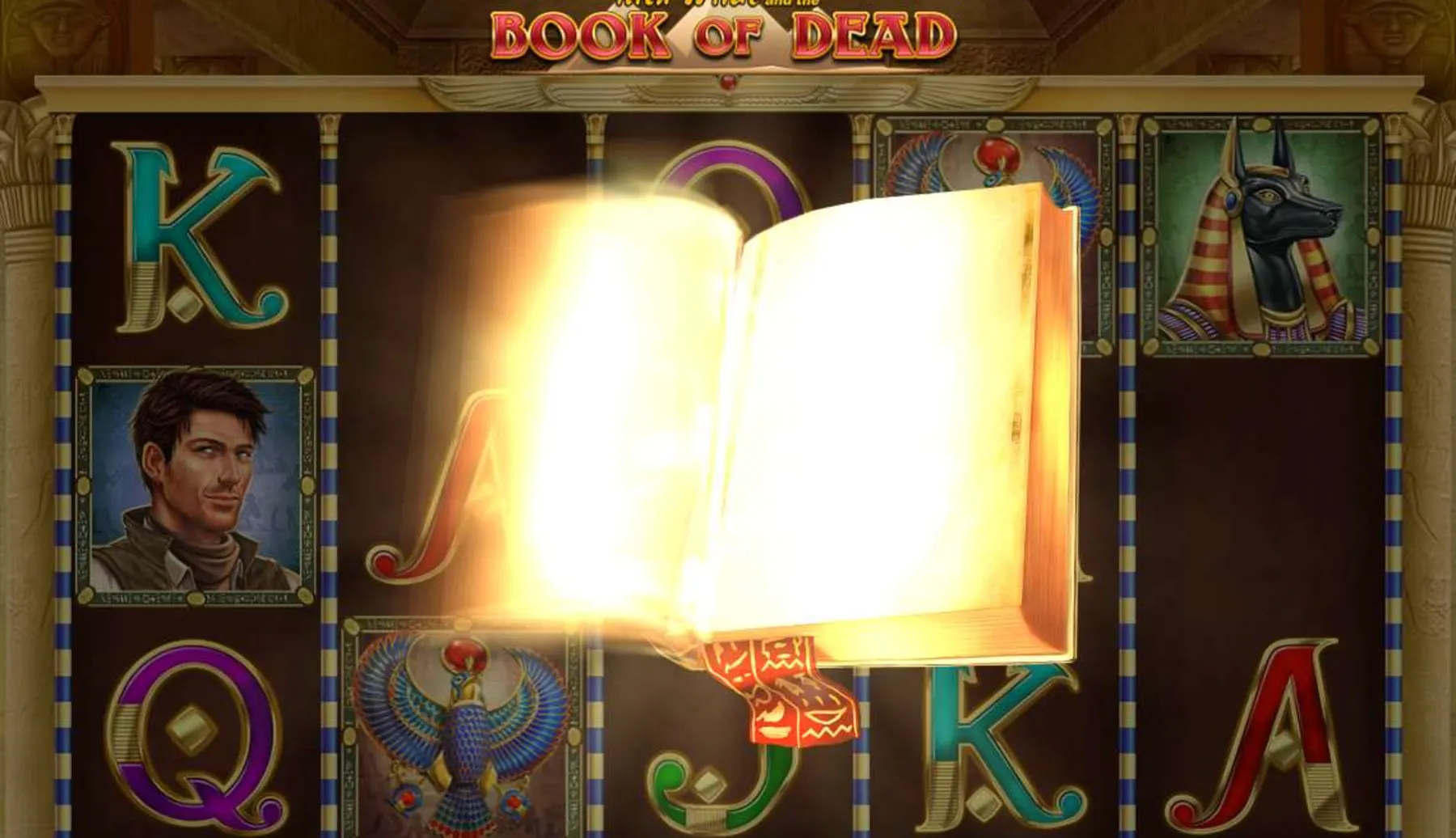
The genre starts with one symbol doing two jobs. In a Book slot the book pays from anywhere on the reels rather than along a line, and on four of the nine games here it substitutes for other symbols as well. Land three and you get free spins; before those spins run, one ordinary symbol is picked out and expands to cover a whole reel.
That is the shared skeleton. The useful work is in the differences, because they are large and the marketing rarely mentions them. A 1% house edge against a 15.82% one. Ceilings six times apart. Studios whose disclosure ranges from a full table of RTP configurations to a blank page.
Table of contents
- What Every Book Slot Shares
- Nine Games, Side by Side
- The Nine Book Slots in This Catalogue
- Where Book Slots Differ Most
- Who Actually Prints a Number
- What a Book Studio Prints in Its Own Client
- Paid Features Are Not One Thing
- Where This Genre Falls Short
- Using the Rest of This Catalogue
- Key Terms Used on This Page
What Every Book Slot Shares
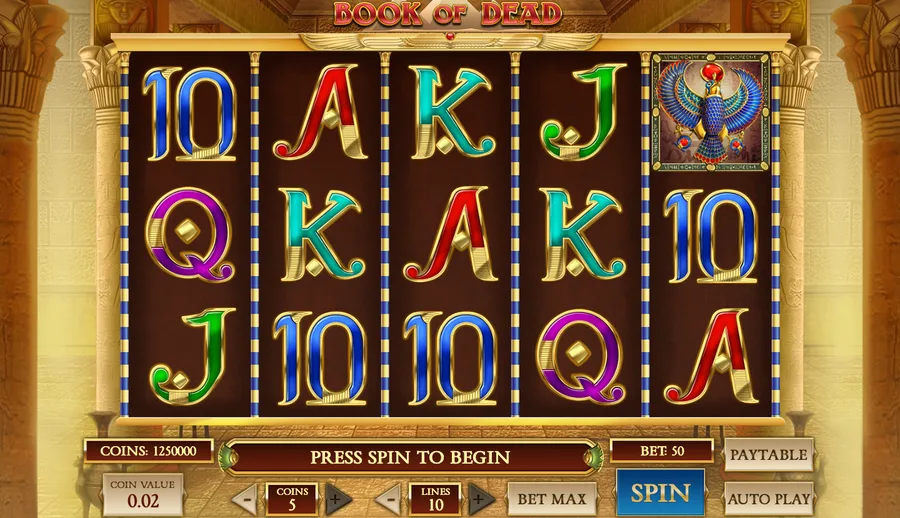
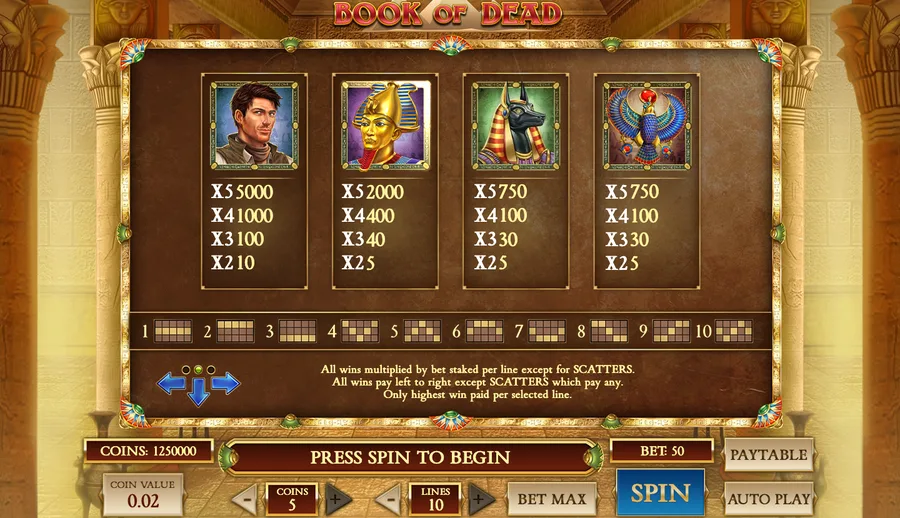
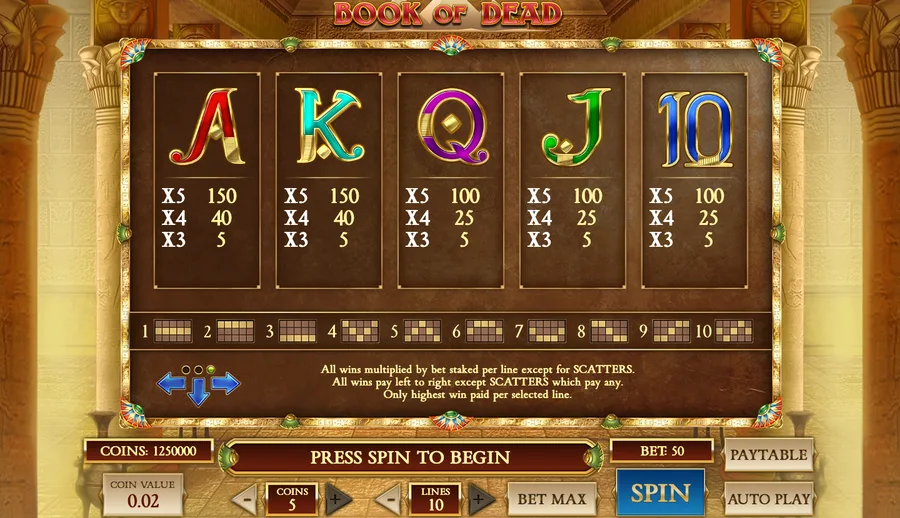
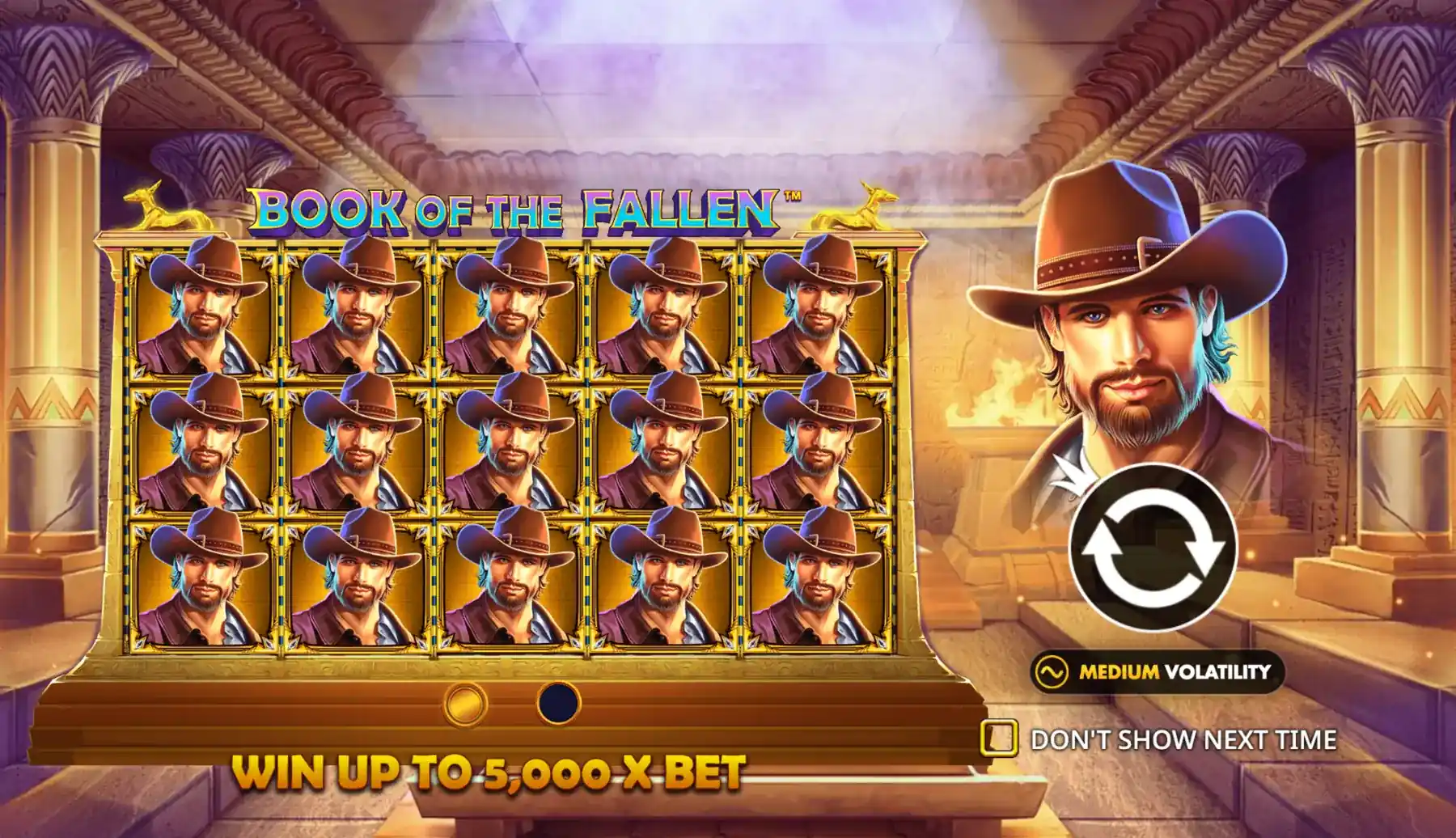
Three things, and the rules we could read cover four titles: Book of Dead, Book of the Fallen, Book of 99 and Book of Gold: Classic. For the other five the source is different. Book of Ra, Book of Ra Deluxe, Book of Shadows and Book of Oz have no rules we could open at all, and on Book of Tut Megaways we read only the intro screen, so what follows about them comes from a studio page, an operator page or a launch release, and each page says which. Three scatters award free spins, and in them one symbol expands to fill a reel: that holds on three of the four sets of rules we read, and for Book of 99 the three-symbol trigger comes from the studio's own product page rather than from the screens we opened. The book also pays from anywhere rather than along a payline, and there the rules cover three of the four — Book of Dead, Book of the Fallen and Book of Gold: Classic all print its scatter payouts. On Book of 99 the book is a counter and a trigger, and the five screens we read print no payout for it at all.
The third thing is where the four stops being the same four. On six of the nine the book is the wild as well. Three of those we read in the clients' own rules — Book of Dead, Book of the Fallen and Book of Gold: Classic. One comes from a licensed casino's page, Book of Oz. Two come from Greentube's own game pages, which say the book substitutes all other symbols for Book of Ra and Book of Ra Deluxe. Book of 99 is the exception we can prove: its rules keep wilds as separate symbols.
That last rule is the one players misread, and it is not the same everywhere. On Book of Dead and Book of 99 the game draws the symbol before the sequence starts, and it is not the best one in the table: in both of our recorded Book of Dead sessions it drew the 10, the cheapest card on the list, worth the same as the Q and the J. Book of the Fallen does the opposite and lets the player preselect it.
Nine Games, Side by Side
What a studio publishes about its own game varies more than the games do. Here is the whole shelf in one place.
The Nine Book Slots in This Catalogue
| Game | Studio | Published return | Win ceiling | Paid feature |
|---|---|---|---|---|
| Book of Dead | Play'n GO | 96.21% default, four more down to 84.18% | 250,000 coins, which is 5,000x at the maximum bet | None |
| Book of Ra | Greentube | Nothing published | Nothing published | Unconfirmed |
| Book of Ra Deluxe | Greentube | 92.13% and 94.26%, both published by casinos | x5010 per one casino, 5000x of the LINE bet per the other | None, per a casino's own feature list |
| Book of Shadows | Nolimit City | 96.01% | 30,338x | Bonus Buy, price not published |
| Book of Oz | Triple Edge Studios | 96.31% base game, 96.50% respin mode, both published by a casino | 5,000x in free spins per the studio, 5,000x unqualified per the casino | A paid single-reel respin |
| Book of the Fallen | Pragmatic Play | 96.50% | 5,000x, quoted from the client's rules | Ante at 10x per spin, or 100x once |
| Book of Tut Megaways | Pragmatic Play | 96.00% | Not published | Ante at 1.25x, plus a buy |
| Book of 99 | Relax Gaming | 99% | 5,000x, quoted inside the free-spins description | None |
| Book of Gold: Classic | Playson | Nothing published | Nothing published | None |
Figures current as of ; the operator's live terms prevail.
Where Book Slots Differ Most
Just under fifteen points separate the top of this shelf from the bottom — 14.82, to be exact — and both ends are published by the studio itself. Book of 99 returns 99%, which Relax Gaming puts on its own product page and builds the title's name around. Book of Dead's lowest configuration returns 84.18%, printed by Play'n GO in the same table as its 96.21% default.
Read as what the house keeps, that is 1% against 15.82%. Stake £100 through the first and you expect to lose £1; through the second, £15.82. Different themes, but the same book, the same expanding symbol, and nearly sixteen times the cost.
The catch is in what the screen tells you. A game that ships in five RTP configurations looks identical in all five, and a public demo prints no figure at all. Where a deployment does print one, it prints the default build. The figure that applies to your session is set by the casino's own deployment, and the place to read it is that casino's own game information, which in several markets a licensed operator has to state.
Who Actually Prints a Number
Not one of the six demo clients we opened named a return on a rules screen we read, Relax Gaming's included — and that one ran with a jurisdiction code attached, the kind of code that switches the figure on in a Play'n GO deployment. On Book of 99 we read five screens of about nine, and on Book of Tut Megaways only the intro screen.
What a Book Studio Prints in Its Own Client
| Studio | Return in the client | Ceiling in the client | Volatility in the client |
|---|---|---|---|
| Play'n GO | Only where the deployment carries a jurisdiction code | Yes, in coins | Not in the client; its document gives two different ratings |
| Playson | No | No | No |
| Pragmatic Play | Not on the screens we read | On one of its two Book titles, not the other | Yes, as a label |
| Relax Gaming | Not on the five screens we read, even with a jurisdiction code | Not on those screens | Not on those screens |
| Nolimit City | Client not opened: a playin.com account is required | Not applicable | Not applicable |
| Greentube | Client not opened: the studio's server answers 401 | Not applicable | Not applicable |
| Triple Edge Studios | No studio demo exists for this title | Not applicable | Not applicable |
So the pattern across the genre is consistent and unhelpful. The game will show you how it pays, and the only client here that prints what it pays back does it when the deployment carries a jurisdiction code, and the public demos we opened either carried none or carried one and still printed nothing.
Paid Features Are Not One Thing
Four of the nine sell something, and what they sell differs enough that a single phrase for all of it would be wrong. Book of the Fallen offers two separate products on one screen. One is an ante bet at 10x the total stake, charged for every spin; the other is a one-off purchase of free spins at 100x. Confuse them over a long session and you are out by a factor of ten.
Book of Tut Megaways, from the same studio, charges 1.25x for an ante that raises the chance of the feature rather than guaranteeing a feature spin. Book of Oz sells no bonus at all - it sells a respin of a single reel, at a cost its studio calls variable and never quantifies. Book of Shadows offers a Bonus Buy whose price Nolimit City does not publish.
Four of the nine sell nothing: Book of Dead, Book of 99, Book of Gold: Classic and Book of Ra Deluxe, the last of those on the word of a casino's own feature list rather than its studio. For the original Book of Ra nobody publishes an answer either way. Of the four, three reach the feature on three scatters alone; Book of 99 adds a second route through its book counter.
Where This Genre Falls Short
Three studios on this shelf publish no return for their games at all, and one of them made the genre. Greentube prints no return and no ceiling for the Book of Ra family, and closes the table that would hold them behind an operator login. It also refuses an anonymous demo session: its gaming server answers 401, and sessions are issued through operators. Playson publishes a release date and a mechanic for Book of Gold: Classic, and no figures — and no casino publishes one for it either, so that title has no checkable return at all. The third studio is Triple Edge Studios, and there a licensed casino does fill the gap: Grosvenor Casinos publishes both of Book of Oz's returns.
On the one title where two casinos are the only source, they disagree. Admiral Casino UK publishes 92.13% for Book of Ra Deluxe; an archived Grosvenor Casinos page from publishes 94.26% for the same title. Admiral is a Novomatic brand, which makes the lower figure the one the studio's own group chose to print.
We would not pick a Book slot from the Book of Ra family on what is published about it today. Book of 99 is the opposite case on the number itself: one figure, from the studio, and the highest on the shelf. Only Book of Dead discloses more overall, and it does so by publishing five returns instead of one.
Using the Rest of This Catalogue
Start with the game you already have in mind and read what its studio publishes; the reviews below are organised that way. If your question is a number rather than a game, the reference section tracks who published which figure and when.
One last caution about the name. Book of the Dead with the article is an Egyptian funerary text, and no slot here is called that. If that is what you came for, nothing on this site will help.
Key Terms Used on This Page
- Book symbol
- The scatter at the centre of the genre: on three of the four games whose rules we read it pays from anywhere, and on six of the nine it is the wild as well.
- Expanding symbol
- The symbol that covers a whole reel during free spins, usually paying even on non-adjacent positions; of the games whose rules or operator pages we could read, five draw it, and Book of the Fallen lets the player pick it instead.
- House edge
- What the operator keeps over the long run - 1% on Book of 99, 15.82% on the lowest configuration of Book of Dead.
- RTP configuration
- One of several published return versions of the same game; Book of Dead has five, and the casino picks.
- Ante bet
- A raised stake charged on every spin; on one title here it improves the chance of the feature, on another it turns the spin into a feature spin, and neither is the same as buying one.
Deposits and identity checks stay on the operator's own secure site.
Related Reading
Elsewhere in this catalogue, from the same section first: