

Book of Oz: Slot with Two Returns, One per Mode
In short — our verdict: 5.4/10 — The two returns quoted for this game everywhere are not rivals: a licensed casino prints both and names each mode. Base game 96.31%, respin mode 96.50% — catalogues publish one of them and lose the other half.
Catalogues have argued about this game's return for years, quoting 96.31% in one place and 96.50% in another. Both are right, and one page prints them that way. An archived page of a UK-licensed casino, captured on , gives the pair in a single line and labels each: 96.31% in the base game, 96.50% in respin mode. The studio's own press release, meanwhile, publishes no return at all — but it does say the 5,000x ceiling applies inside free spins.
5.4/ 10
- Return transparency5.0
- Ceiling clarity6.0
- Feature depth6.0
- Bet range6.0
- Documentation4.0
Table of contents
- Book of Oz Strengths and Weaknesses
- Two Returns for One Book of Oz, as a Casino Prints Them
- The Argument About This Book Slot Is Over
- Two Published Ceilings, One Condition
- Three Possible Free-Spin Counts
- The Respin Nobody Has Priced
- Why There Is No Session Behind This Page
- What the Studio's Launch Release Does and Does Not State
- Our Book of Oz Verdict and Rating
- Key Terms Used on This Page
- What Else Do Readers Ask
Book of Oz Strengths and Weaknesses
Pros: What Works Well
- Pro: A licensed casino publishes a return for EACH mode and labels them, which resolves an argument catalogues have been having for years
- Pro: The studio's launch release states the free-spins trigger gives 10, 12 or 25 spins — three outcomes, not one
- Pro: The paid respin buys one reel rather than a whole round — a different product from the bonus buys elsewhere in this catalogue
- Pro: The book is both scatter and wild, which the operator page states plainly
- Pro: The same casino page publishes the stake range, 10p to £25, which the studio does not
Cons: What Holds It Back
- Con: Games Global publishes no page for this game at all, so the return comes from a casino rather than its maker
- Con: The respin price is described in the studio's own release as "an additional variable cost" and never quantified
- Con: The 5,000x ceiling is quoted by the studio as applying IN FREE SPINS, while the casino that publishes the returns drops the condition and adds a £250,000 cap
- Con: No demo from the studio exists to open, so nothing on this page comes from our own play
Two Returns for One Book of Oz, as a Casino Prints Them
| Mode | Published return | Where it comes from |
|---|---|---|
| Base game | 96.31% | Grosvenor Casinos game page, archived |
| Respin mode | 96.50% | Same line on the same page |
Figures current as of ; the operator's live terms prevail.
The Argument About This Book Slot Is Over
Two figures circulate for Book of Oz, 96.31% and 96.50%, and the usual assumption is that one of them is wrong. A licensed casino settles it in a single line: "RTP = 96.31% (Base Game); 96.50% (Respin mode)".
The game has two modes and a return for each. Catalogues that print one number inherit half a fact. That is how a game ends up looking as though its data conflicts when it does not.
Two Published Ceilings, One Condition
The studio's launch release puts it carefully: wins of up to 5,000 times the initial bet IN FREE SPINS. That qualifier is routinely dropped, and dropping it changes what the number means.
The second publisher drops it. The archived Grosvenor Casinos page of — the same page that carries the two returns — writes "you can win up to 5000x your stake" with no mention of free spins, and adds a money cap the studio never states: "Max payout: £250,000". So the ceiling has two published forms, and the casino's is the one a reader is more likely to meet.
Four other games in this catalogue carry a 5,000x figure, and they do not mean the same thing by it. Book of Dead's applies to the whole game, but no Play'n GO medium prints 5,000x at all: the client prints 250,000 coins and the multiplier has to be derived from the 50-coin maximum bet. Book of the Fallen states it flatly in its own rules. Book of Ra Deluxe has it from a casino, and against the LINE bet. Book of 99 does the same thing on a better carrier: Relax Gaming prints 5,000x inside its free-spins description on the game's own page, while the figure here exists only in a 2018 launch release.
Three Possible Free-Spin Counts
Every Book title in this catalogue whose rules we could read awards a fixed ten spins on trigger: Book of Dead, Book of the Fallen, Book of 99 and Book of Gold: Classic. Playson's sibling title, which is not covered here, awards twelve. This one, per the studio's own release, gives "10, 12 or 25 free spins" from three or more book scatters.
The mapping is published. Just not by the studio: the archived Grosvenor Casinos page of prints "3, 4 or 5 Scatters trigger 10, 12 or 25 free spins respectively", while the launch release lists the three numbers and stops there. The longest round is two and a half times the shortest, and which one you get is decided by the third, fourth or fifth scatter.
The same archived page carries one more figure the studio never published: a stake range of 10p to £25. It is an operator setting rather than a property of the game, and it is the only stake range we found printed for this title anywhere.
The Respin Nobody Has Priced
Instead of a bonus buy, this game sells a respin of a single reel "at an additional variable cost", in the studio's words. Whether that is cheaper than buying a round, nobody outside the studio can say: the release calls the cost variable and never puts a number on it, and this game sells no bought round to compare it with.
We could not find a figure published anywhere else either. That is a gap worth stating. The price of a paid mechanic is the fact a reader most needs, and here it does not exist in public.
Why There Is No Session Behind This Page
Games Global runs no public demo for this title, and the studio has no per-game page to launch one from. Everything here therefore comes from two documents: a dated press release and an archived operator page.
We could have opened an aggregator's copy and called it testing. On this site a screenshot means a studio's own client, so where there is none, there are no frames and we say why.
What the Studio's Launch Release Does and Does Not State
| Fact | Value | In the release? |
|---|---|---|
| Reels and lines | Five reels, ten paylines | Yes |
| Volatility | High | Yes |
| Maximum win | Up to 5,000x the initial bet IN FREE SPINS | Yes, with that qualifier |
| Free spins awarded | 10, 12 or 25 | Yes |
| Respin price | "An additional variable cost" | Named, never quantified |
| Return to player | — | No |
Our Book of Oz Verdict and Rating
Key Terms Used on This Page
- Respin mode
- A paid respin of one reel; a licensed casino publishes a separate return for it, 96.50% against 96.31% in the base game.
- Mode-specific return
- A return figure that applies to one way of playing rather than to the game as a whole.
- Feature-only ceiling
- A maximum win stated for free spins rather than for the whole game, which is how this studio words it.
- Press-release sourcing
- Facts taken from a studio's dated launch announcement when no specification page exists.
Deposits and identity checks stay on the operator's own secure site.
Related Reading
Elsewhere in this catalogue, from the same section first:
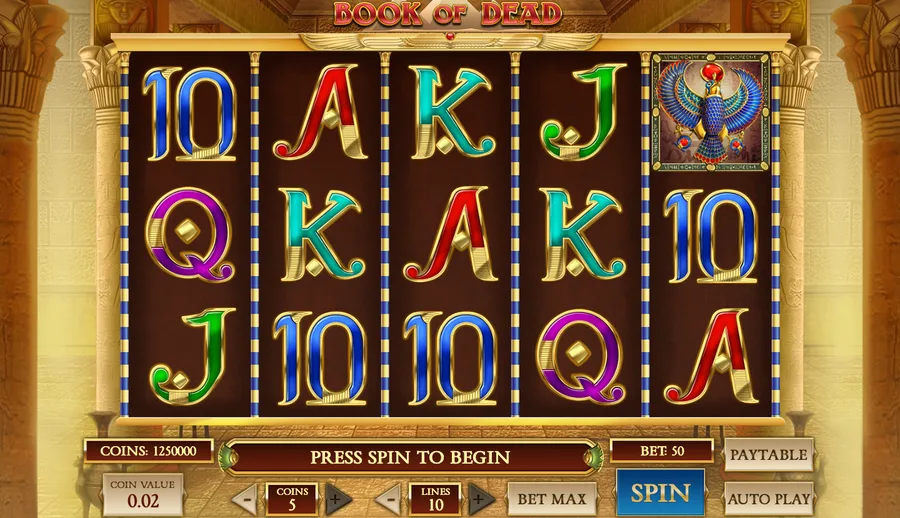 Games
GamesBook of Dead
Five RTP configurations, 96.21% down to 84.18%
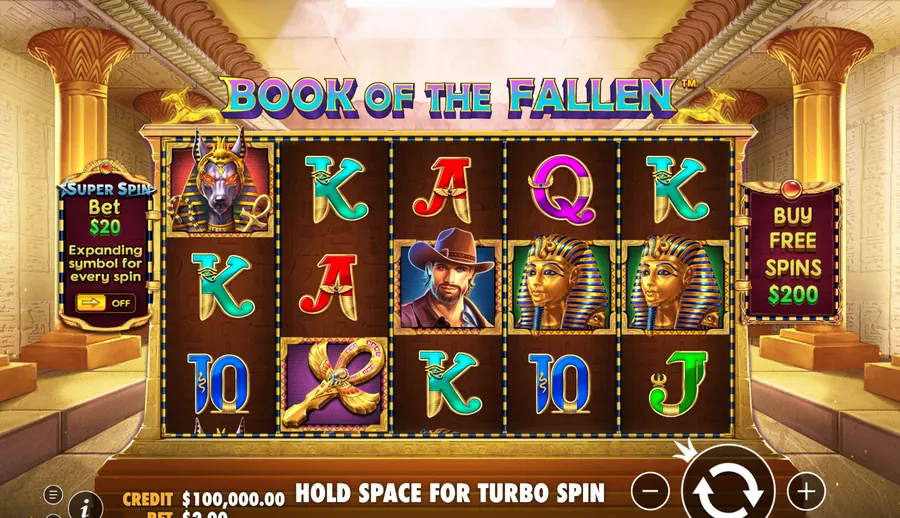 Games
GamesBook of the Fallen
Two paid options: 10x per spin or 100x once
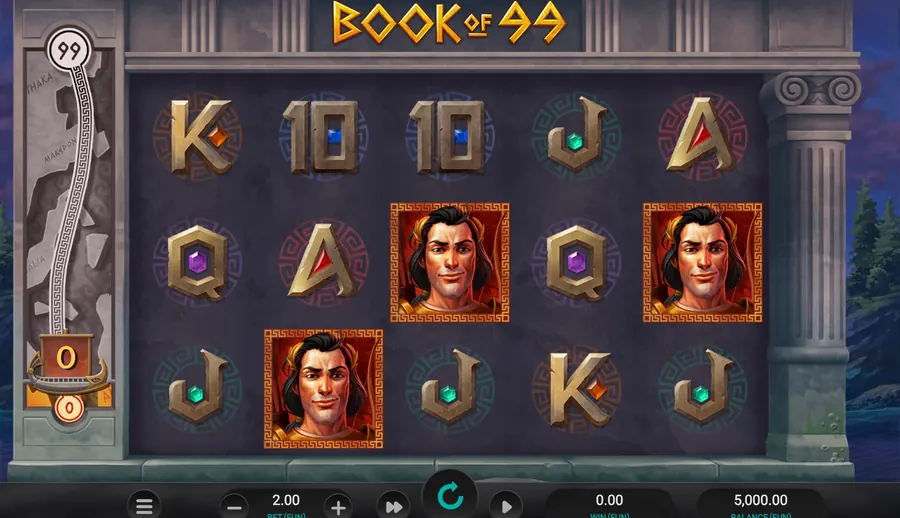 Games
GamesBook of 99
99% return — three points above the catalogue norm
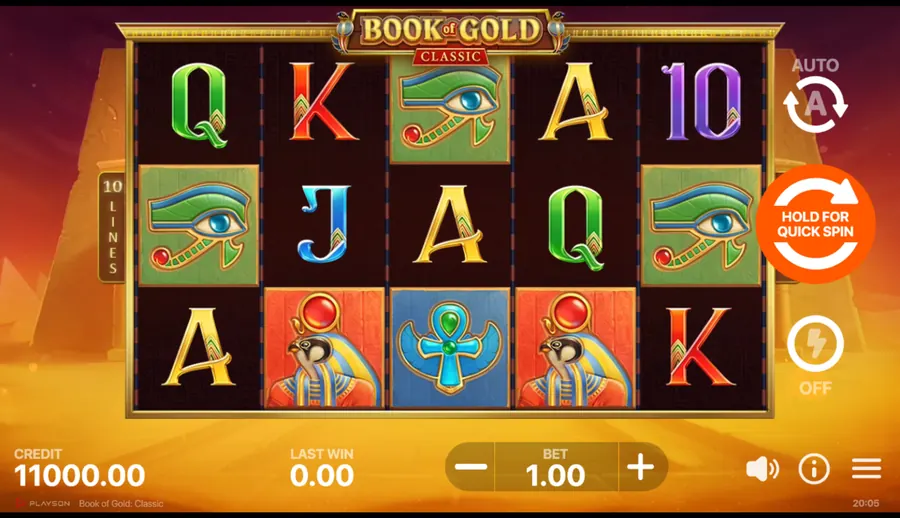 Games
GamesBook of Gold: Classic
No return we could find, from studio or casino
 Games
GamesBook of Tut Megaways
1.25x ante buys a chance, not a feature spin
What Else Do Readers Ask?
The common questions about this game are mostly about which number applies when.
Is the Book of Oz RTP 96.31% or 96.50%?
Both, and the pair is not a contradiction: an archived page of a licensed casino, captured on , gives 96.31% for the base game and 96.50% for the paid respin mode.
What is the maximum win?
Up to 5,000 times the initial bet — and the two publishers word it differently. The studio's own launch release attaches the figure to free spins; a licensed casino prints the same 5,000x with no condition and a £250,000 money cap beside it.
How many free spins does the trigger give?
Ten, twelve or twenty-five. The studio's release lists the three numbers; the mapping to three, four and five scatters comes from a licensed casino's own page.
How much does the respin cost?
Nobody says. The studio calls it an additional variable cost and never publishes a figure, and no operator page we read puts a number on it either.
Where did these numbers come from?
We look for the studio's own demo and specification first; with neither available we use dated documents and name each one.